
 0161 477 7282
 Visit Our Showroom
 Book Appointment
 Menu
Menu


Let there be light…
Light is a key element in the design of any kitchen. It changes any room, giving new life to wasted space…
Read Full Article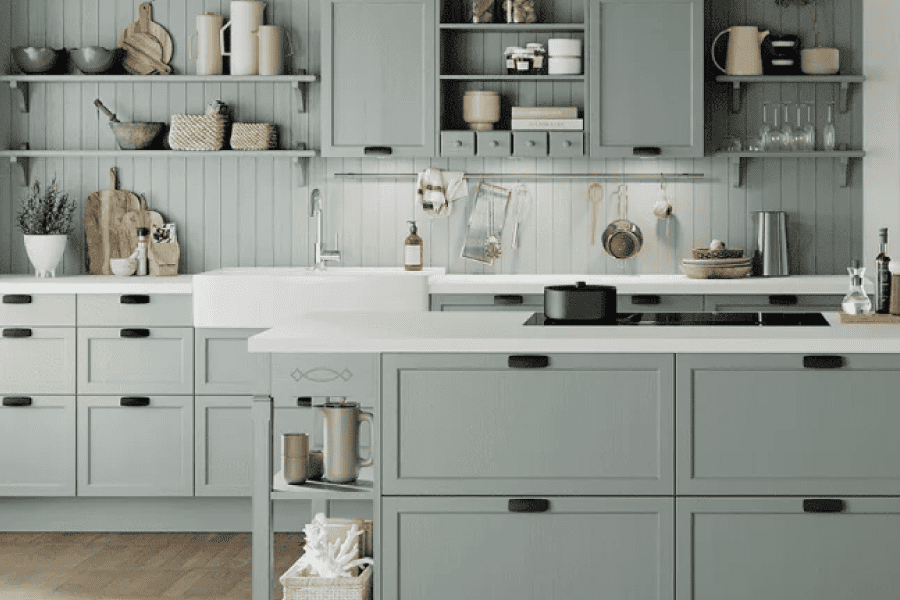
There’s a reason German kitchens have become so popular around the world. It isn’t just the clean lines, beautifully finished cabinetry or the sleek look you often see in showrooms. A lot of the appeal comes from what’s happening behind the doors and drawers too.
German kitchen design is built around making the most of the space you have and thinking carefully about how everything will be used. Storage, opening systems, cabinetry, appliances and even the smallest details can all be considered as part of the same design, rather than being treated as separate decisions.
At Urban Haus, we’ve been designing German kitchens for more than 20 years. We work with two of Germany’s most respected kitchen manufacturers, Häcker and Ballerina, giving us access to a huge choice of cabinetry, finishes, storage solutions and configurations.
So, what is it about German kitchen design that makes such a difference when you live with it? Here are five things we think you’ll notice.
One of the biggest differences with German kitchen design is the amount of thought that goes into the details. It’s not just about deciding where the cupboards will go and choosing a door colour. The dimensions, storage, opening mechanisms and internal fittings can all be considered together to make the finished kitchen work properly for you.
That precision gives us far more flexibility when we’re designing a kitchen. Cabinet heights can be adjusted, storage can be configured around what you actually need to keep and awkward spaces can often be put to much better use.
Think about a tall cabinet, for example. It could simply be a large cupboard, but with the right internal configuration it can become a really useful home for food, small appliances or other things you’d rather keep off the worktop. The same applies to drawers, corner units and wall cabinets. Their value comes from how well they fit into the way you use the room.
This is one of the things we love about German kitchens. The detail isn’t there just for the sake of it. It gives us more ways to create a kitchen that feels like it belongs in your home, rather than making your home work around the kitchen.
When people picture a German kitchen, they often imagine a sleek, white, handleless design. That can certainly be part of it, but German kitchen design is much broader than that.
Häcker and Ballerina offer a huge range of colours, materials, finishes and door styles, so there’s plenty of scope to create something that suits your home and your taste. You can have matt finishes, wood effects, textured surfaces, stone-inspired finishes, contemporary handleless doors or designs with a more traditional feel.
That choice is important because the best kitchen isn’t necessarily the one that looks most like a kitchen you’ve seen online. It’s the one that works with your home.
A modern open-plan extension might suit a streamlined handleless design, while a period property could look fantastic with a warmer finish and more traditional door style. You can even combine different finishes to create contrast between an island and the rest of the cabinetry.
The point is that choosing a German kitchen doesn’t mean choosing a particular aesthetic. It gives you the freedom to decide how you want your kitchen to look while still benefiting from the same attention to functionality and detail.
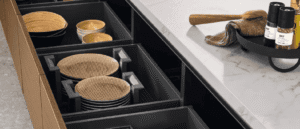
How many cupboards do you have in your current kitchen? And how many of them are actually easy to use?
It’s surprisingly easy to end up with plenty of storage but still have worktops covered in appliances and cupboards full of things you can never quite find. Good kitchen storage isn’t simply about squeezing in as many units as possible. It’s about making the space work harder.
German kitchen design gives us lots of ways to do that. Internal pull-outs, deep drawers, drawer organisation, tall-unit storage and specialist corner solutions can all be used depending on what you need to store.
That means we can think about the kitchen in terms of your routine rather than just the room’s dimensions. Your everyday ingredients might be kept close to your main preparation area. Pans could have their own deep drawers next to the hob. Recycling can be built into a convenient cabinet rather than left taking up valuable floor space. Small appliances can have a dedicated home instead of permanently occupying your worktop.
It might sound like a small distinction, but it makes a huge difference once you start using the kitchen every day.
The aim isn’t to give you the most cupboards possible. It’s to make sure the things you use most are easy to reach, the things you rarely use aren’t taking up prime space and everything has somewhere sensible to live.
There’s no denying that handleless kitchens look fantastic. Removing traditional handles creates clean, uninterrupted lines and can make cabinetry feel much more integrated into the room, particularly in an open-plan space.
But there’s more to a handleless kitchen than simply taking the handles away.
The way your doors and drawers open affects how the kitchen feels to use, and there are several different systems available. Depending on the design, you could have push-to-open mechanisms, Tipmatic Softclose, Sensomatic or Servodrive, with different options suited to different types of cabinetry and the way you want to use it.
Some systems let you open a drawer with a light push, while electronic assistance can make larger or heavier doors and drawers easier to operate. Soft-close mechanisms then make sure everything closes smoothly and quietly.
That’s why we always think it’s worth looking beyond the appearance when choosing a handleless design. Two kitchens can look almost identical but feel completely different to use depending on the opening system inside them.
It’s also one of those things that’s much easier to understand when you can try it for yourself. In our showroom, you can open the drawers, try the different mechanisms and get a feel for what works for you before making a decision.
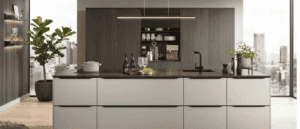
Your cabinetry is only one part of your kitchen. Where your appliances go, how much preparation space you have, where people sit and how you move around the room all have an impact on how enjoyable the kitchen is to use.
That’s why we look at the whole space from the beginning rather than choosing the cabinets first and trying to fit everything else around them.
If you cook regularly, for example, the relationship between your hob, oven, fridge, preparation area and storage can make a real difference. If you entertain often, you might want your island to work as both a preparation area and somewhere for people to sit. If you prefer to keep appliances out of sight, we can look at ways to incorporate them into the cabinetry without compromising the layout.
We also work with leading German appliance manufacturers including Neff. As a Neff MasterPartner, we have access to the latest appliances and the expertise to help you choose options that work with your kitchen rather than simply adding appliances to it. Our showroom also has fully working appliances, so you can see and try them before you make your choice.
When the cabinetry, appliances, worktops, storage and layout have all been considered together, the finished kitchen feels much more cohesive. Everything has a reason for being where it is, and the room works whether you’re cooking dinner, making a quick cup of tea or sitting down with friends.
The appeal of German kitchen design isn’t really about having a kitchen that looks expensive or impresses people when they walk through the door. It’s about the experience of living with it.
You get more flexibility in the design, more ways to use your storage and more choice over the details that can make everyday life easier. And because so much can be configured around the space and the person using it, your kitchen doesn’t have to follow a particular style or layout to benefit from German design.
The best way to find out what that could look like in your home is to start with how you actually live. Think about what works in your current kitchen, what doesn’t and what you wish you had more space for. Those details give us somewhere useful to start. You could also take a look through some of our past customer kitchen designs for inspiration.
At Urban Haus, we’re a family-run business with more than 20 years of kitchen design experience, and we’d love to hear what you have in mind. Give us a call on 0161 477 7282, pop into our award-winning Stockport showroom or book a design appointment. We can talk through your ideas, show you what’s possible and start working out how to make the most of your space.

Light is a key element in the design of any kitchen. It changes any room, giving new life to wasted space…
Read Full Article
Ballerina Küchen is our award winning, premium, modern kitchen range. They have been been awarded 1st Place in a nationwide survey of over 1000 German kitchen retail specialists…
Read Full Article
A study found just a suger-cube sized piece of kitchen sponge contains 54 billion bacteria cells. Remove the need for a sponge on your countertop and let the dishwasher take over…
Read Full ArticleOur designer kitchen showroom in Stockport, Manchester is packed with beautiful
German Kitchens, inspirational ideas and a host of fully working appliances to try out.
There are some great examples of true-handless, open plan, modern and traditional kitchens.
Take a look at some of our work or follow us on Instagram
